Nir Shamir is a senior product designer who works at the intersection of people, complexity, and shipping things that actually work. He believes the best pixels are the ones you never notice.
Munch
,
Social AI
,
2024 - Present
Munch started as a tool for creators repurposing video. When the product expanded to serve SMBs, everything changed. Different goals, different workflows, and users who had no patience for a learning curve. I designed the social media manager from scratch: content strategy, scheduling, analytics, multi-brand management, and team collaboration. The constraint was that every new capability had to feel like it belonged to the same product, not a feature that got bolted on. The hardest decision was the AI layer. Early versions surfaced suggestions aggressively and users ignored them or turned them off entirely. The fix wasn't smarter AI, it was giving users visible control. Every AI action had a clear override, every suggestion showed its reasoning. Trust went up when the product stopped trying to be clever and started being transparent. I learned that complexity isn't the enemy. Invisible complexity is. Users can handle a powerful tool. They can't handle one they don't understand.

MNCH_01.jpg

MNCH_02.jpg

MNCH_03.jpg

MNCH_04.jpg

MNCH_05.jpg

MNCH_06.jpg

MNCH_07.jpg

MNCH_08.jpg

MNCH_09.jpg

MNCH_10.jpg
Munch
,
Social AI
,
2024 - Present
Munch started as a tool for creators repurposing video. When the product expanded to serve SMBs, everything changed. Different goals, different workflows, and users who had no patience for a learning curve. I designed the social media manager from scratch: content strategy, scheduling, analytics, multi-brand management, and team collaboration. The constraint was that every new capability had to feel like it belonged to the same product, not a feature that got bolted on. The hardest decision was the AI layer. Early versions surfaced suggestions aggressively and users ignored them or turned them off entirely. The fix wasn't smarter AI, it was giving users visible control. Every AI action had a clear override, every suggestion showed its reasoning. Trust went up when the product stopped trying to be clever and started being transparent. I learned that complexity isn't the enemy. Invisible complexity is. Users can handle a powerful tool. They can't handle one they don't understand.
MNCH_01.jpg
MNCH_02.jpg
MNCH_03.jpg
MNCH_04.jpg
MNCH_05.jpg
MNCH_06.jpg
MNCH_07.jpg
MNCH_08.jpg
MNCH_09.jpg
MNCH_10.jpg
Phoenix
,
Finance
,
2022
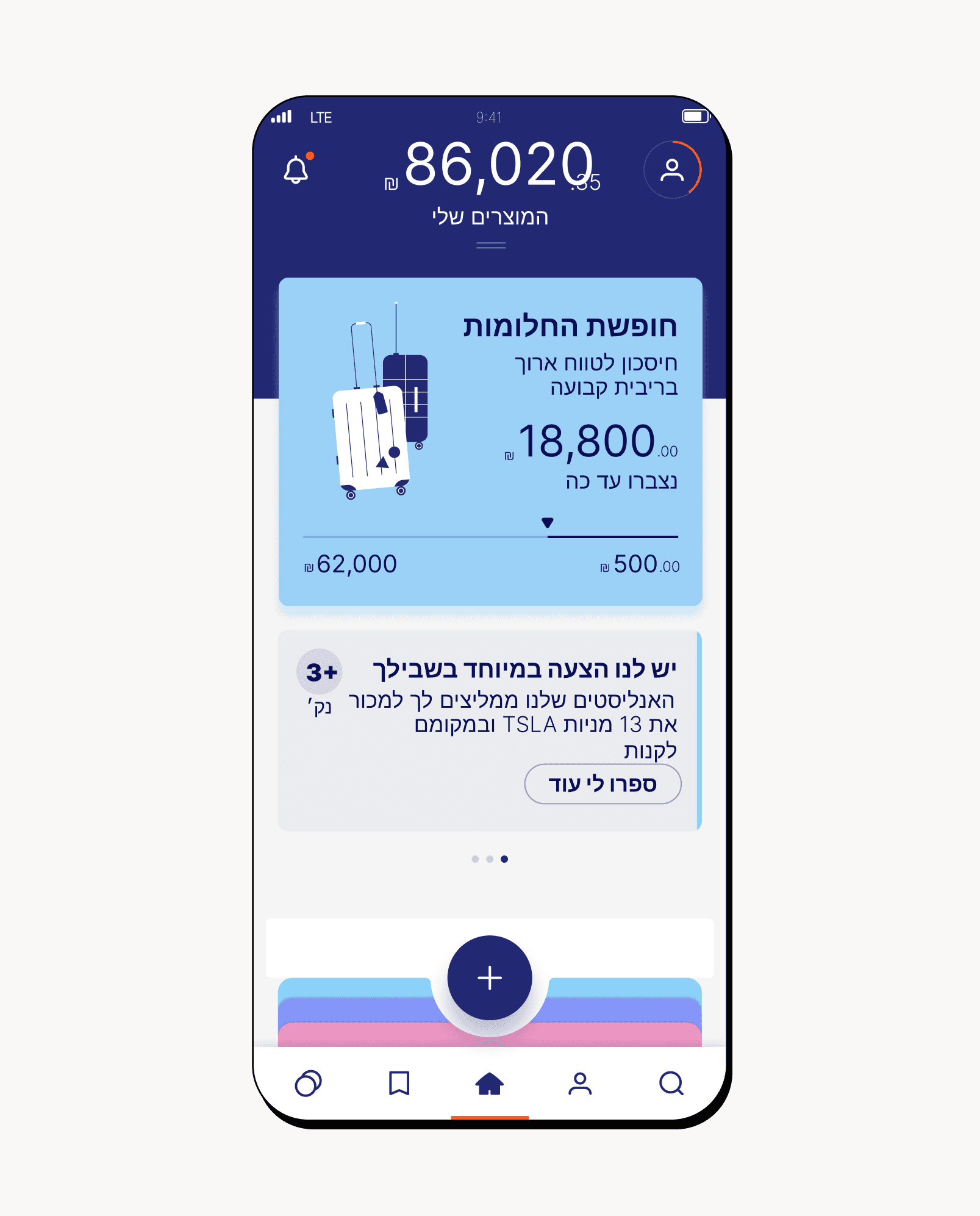
Israeli pension and investment data has always lived inside bank portals built for accountants, not people. Phoenix needed to change that. I designed a mobile experience that leads with a single portfolio number and breaks down holdings as proportional bubbles, making performance immediately readable without tables or charts. The challenge was building confidence without oversimplifying, letting users feel in control of something that had always felt out of reach. I learned that in finance, trust is a design problem. Every label, every number, every empty state either earns it or loses it.

PHX_01.JPG
PHX_02.JPG

PHX_03.JPG

PHX_04.JPG

PHX_05.JPG

PHX_06.JPG

PHX_07.JPG

PHX_08.JPG
Phoenix
,
Finance
,
2022
Israeli pension and investment data has always lived inside bank portals built for accountants, not people. Phoenix needed to change that. I designed a mobile experience that leads with a single portfolio number and breaks down holdings as proportional bubbles, making performance immediately readable without tables or charts. The challenge was building confidence without oversimplifying, letting users feel in control of something that had always felt out of reach. I learned that in finance, trust is a design problem. Every label, every number, every empty state either earns it or loses it.
PHX_01.JPG
PHX_02.JPG
PHX_03.JPG
PHX_04.JPG
PHX_05.JPG
PHX_06.JPG
PHX_07.JPG
PHX_08.JPG
Ministry of Justice
,
Dispute
,
2021
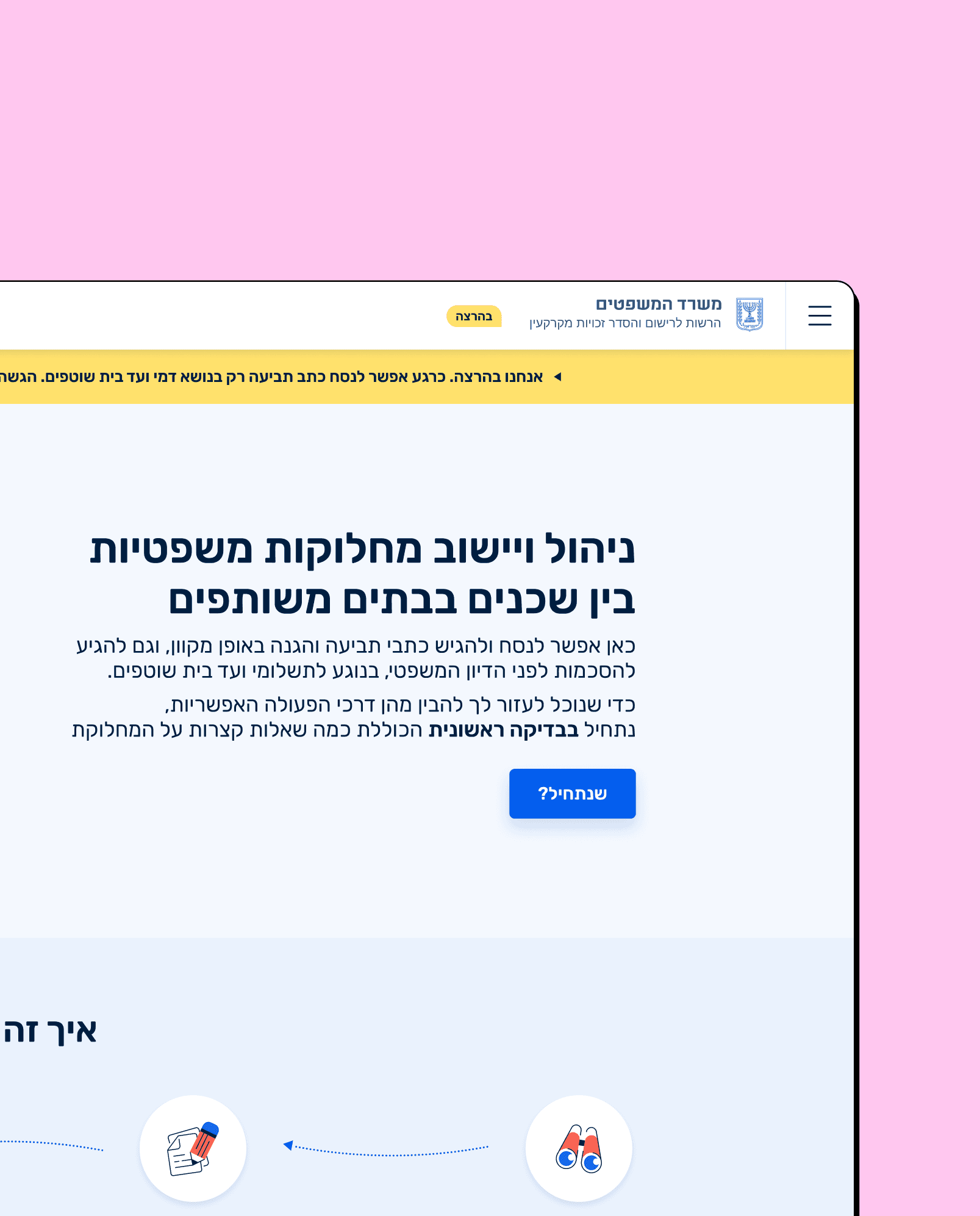
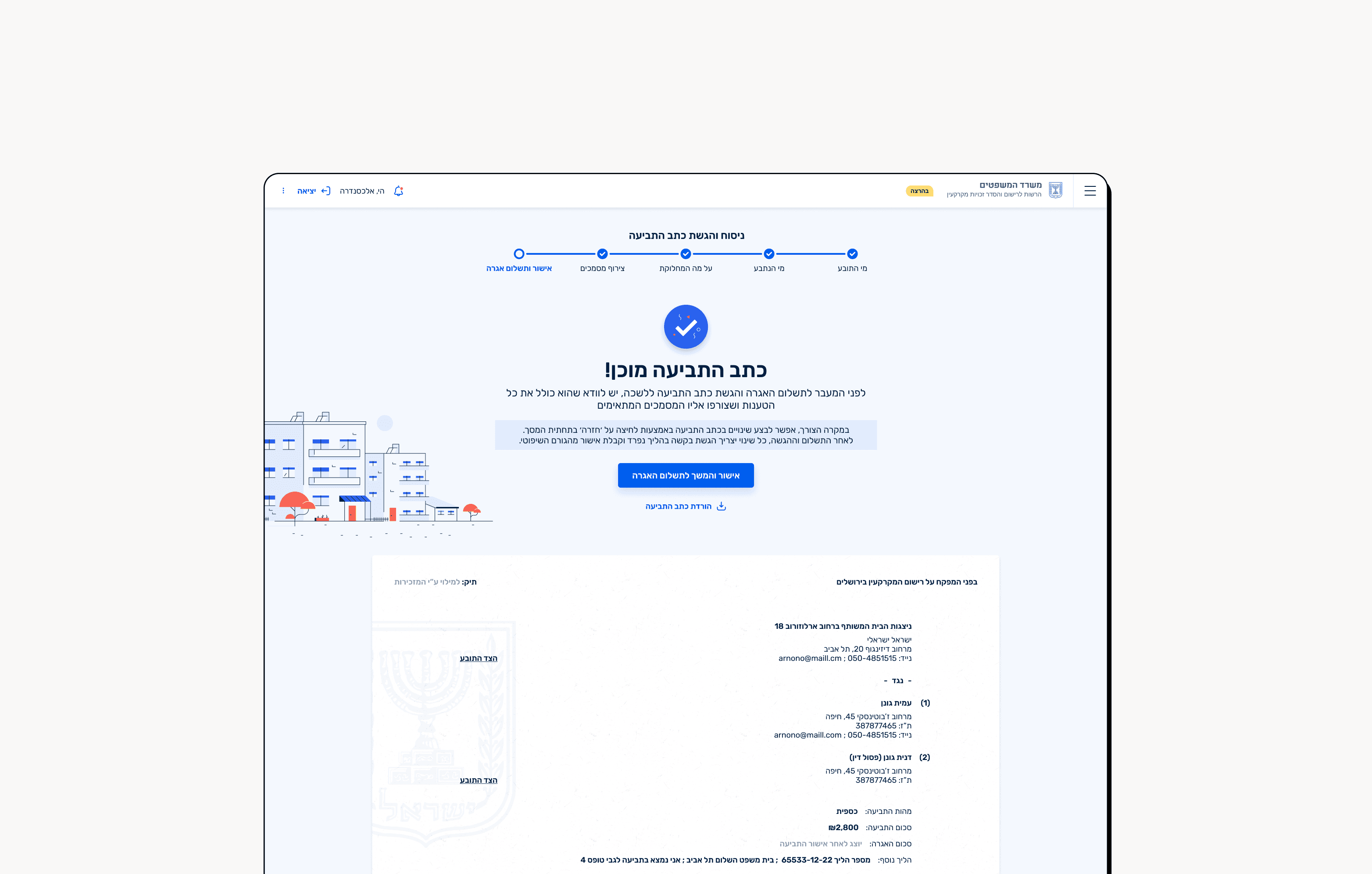
Filing a legal dispute in Israel meant visiting a court office, filling out paper forms, and hoping you did it right. The Ministry of Justice wanted to bring that process online. I designed a step-by-step wizard with plain-language instructions, clear progress tracking, and a confirmation state that gives users confidence before they submit. The focus was on preventing errors before they happen, not recovering from them after. I learned that government design is humility work. The user is stressed, confused, and has no margin for error. Your job is to get out of the way.
JSTC_01.JPG

JSTC_02.JPG

JSTC_03.JPG
JSTC_04.JPG

JSTC_05.JPG

JSTC_06.JPG

JSTC_07JPG

JSTC_08.JPG
Ministry of Justice
,
Dispute
,
2021
Filing a legal dispute in Israel meant visiting a court office, filling out paper forms, and hoping you did it right. The Ministry of Justice wanted to bring that process online. I designed a step-by-step wizard with plain-language instructions, clear progress tracking, and a confirmation state that gives users confidence before they submit. The focus was on preventing errors before they happen, not recovering from them after. I learned that government design is humility work. The user is stressed, confused, and has no margin for error. Your job is to get out of the way.
JSTC_01.JPG
JSTC_02.JPG
JSTC_03.JPG
JSTC_04.JPG
JSTC_05.JPG
JSTC_06.JPG
JSTC_07JPG
JSTC_08.JPG
Easy City
,
Communication
,
2021
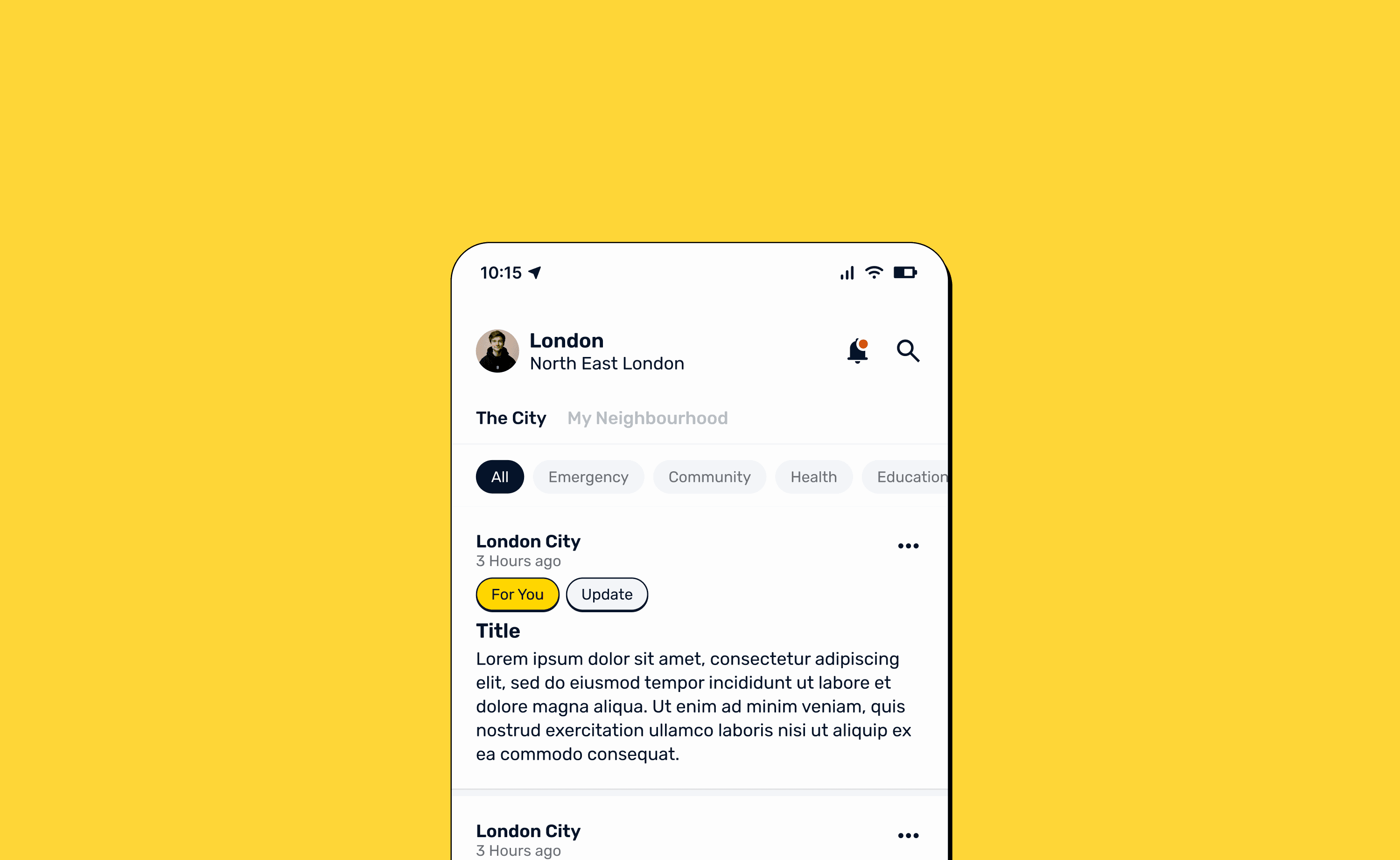
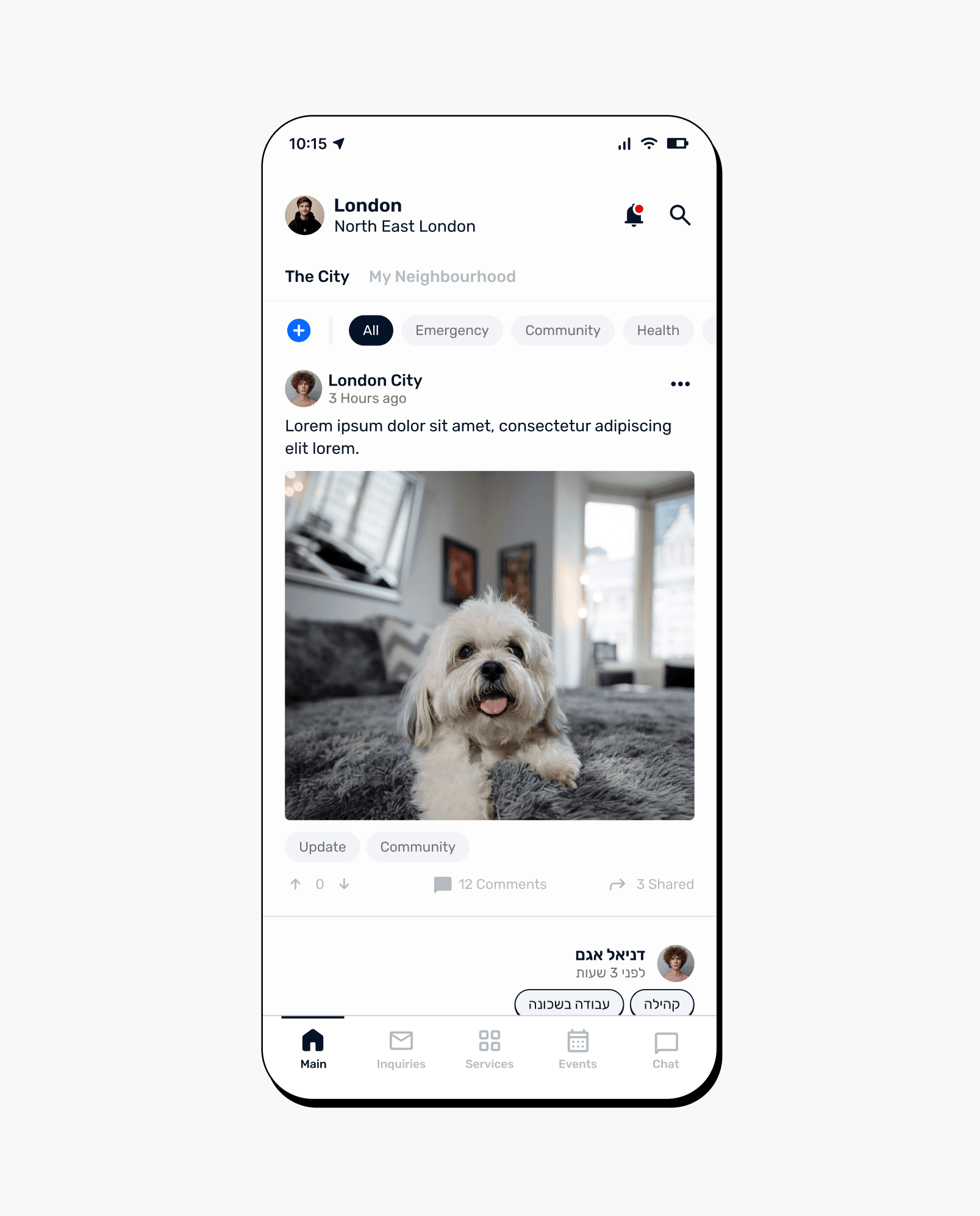
Cities communicate badly. Residents miss urgent updates, can't tell what's relevant to their neighbourhood, and have no single place to look. I designed a feed-based mobile app with location-aware filtering, category tags, and a personalised layer that surfaces hyper-local content. The UI borrows from news app conventions to reduce the learning curve so the product feels familiar from the first scroll. I learned that civic products live or die on trust. If people don't believe the information is accurate and timely, they stop opening it.
ECITY_01.JPG

ECITY_02.JPG
ECITY_03.JPG

ECITY_04.JPG

ECITY_05.JPG

ECITY_06.JPG

ECITY_07.JPG
Easy City
,
Communication
,
2021
Cities communicate badly. Residents miss urgent updates, can't tell what's relevant to their neighbourhood, and have no single place to look. I designed a feed-based mobile app with location-aware filtering, category tags, and a personalised layer that surfaces hyper-local content. The UI borrows from news app conventions to reduce the learning curve so the product feels familiar from the first scroll. I learned that civic products live or die on trust. If people don't believe the information is accurate and timely, they stop opening it.
ECITY_01.JPG
ECITY_02.JPG
ECITY_03.JPG
ECITY_04.JPG
ECITY_05.JPG
ECITY_06.JPG
ECITY_07.JPG